Canada: Rush hour on 'Iceberg Alley'
Spring is peak season for the towering icebergs that drift past Newfoundland's east coast, attracting visitors from all over the world.
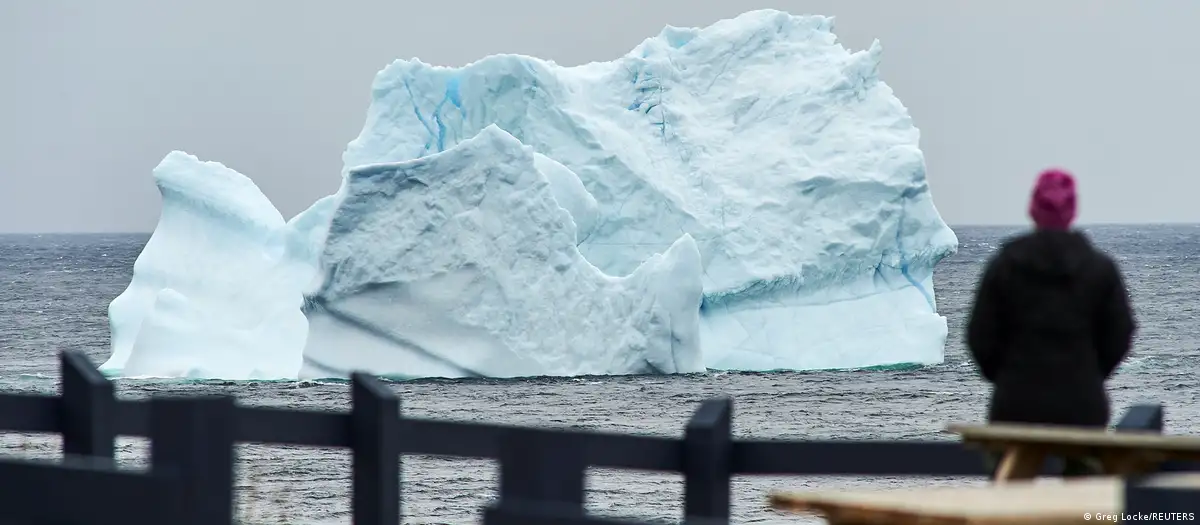
Frozen beauty
Most of the icebergs that drift past Canada's easternmost province of Newfoundland and Labrador in spring and summer have calved away from glaciers in western Greenland. Of the approximately 40,000 icebergs that calve annually, only a fraction reach the southern waters of Newfoundland after two years.
Profitable pieces of ice
Around 400 to 800 icebergs drift past here every year, which is why this stretch of coastline is also known as "Iceberg Alley." They are a boon to the Canadian economy: During the peak season between April and July, numerous tourists from all over the world visit Newfoundland and Labrador to marvel at this natural phenomenon.
Everyday event
The locals, however, have long since grown accustomed to the sight. Raymond Rogers from Burnt Point only glances briefly at the passing iceberg while he hangs up his laundry.
Giant glacier
An iceberg that has washed ashore in Pouch Cove harbor towers over the town's houses. Its true size, however, can only be guessed at. Only 10% of an iceberg protrudes from the water. In 1912, this fact proved fatal for the Titanic. The famous passenger ship collided with the submerged portion of a massive iceberg and sank about 600 kilometers (372 miles) off the coast of Newfoundland.
Breaking the ice
Taylor Lindsorn uses an ax to chop ice from an iceberg. "Iceberg hunters" like him salvage chunks of ice in the North Atlantic, melt them and sell the resulting iceberg water, which is considered exceptionally pure and marketed as a luxury product. It is used in spirits and cosmetics, among other things.
Melting point
The ice of icebergs is often between 10,000 and 25,000 years old. But the end of Iceberg Alley near St. John's, the provincial capital of Labrador and Newfoundland, is also the end for most passing icebergs. They melt in the warm Gulf Stream, which pushes the cold Labrador Current westward from here.