Bavarian Alps: 'Ice chapel' on Watzmann collapsed
End of a tourist attraction: In the Berchtesgaden Alps, the so-called ice chapel has collapsed. The collapse is a consequence of climate change — and is creating dangerous conditions for mountaineers.
Victim of global warming
Not much remains: this image, published by the Berchtesgaden Alps National Park Administration, shows the ice chapel after its collapse on September 9. According to a statement from the national park, the ice walls at the edge and a final remaining ice arch could come down at any time. The collapse is said to be a consequence of advancing climate change.
End of a tourist attraction
Faded beauty: The ice chapel was one of the most important attractions in Berchtesgaden National Park. The cavity inside the firn ice field at an altitude of 900 meters (2,953 feet), located at the foot of the Watzmann East Face and near Lake Königssee, attracted thousands of tourists every year.
Anticipated adversity
Researchers had already anticipated the disappearance of the ice chapel: since 1953, almost one million cubic meters of firn ice had melted away. Even the snowy winters between 2017 and 2019 could not halt the process: Between 2019 and 2022 alone, the geotope lost more than half of its area. However, the early timing of the collapse surprised even experts.
Shrinking snowfield
The ice chapel was considered the lowest permanent ice field in the German Alps. However, recent winters have seen little snowfall, and summers have been very warm on average: less than ideal conditions for the geotope's survival. The warm precipitation of recent weeks further accelerated the melting process until the ice chapel finally collapsed bit by bit.
Life-threatening danger for hikers
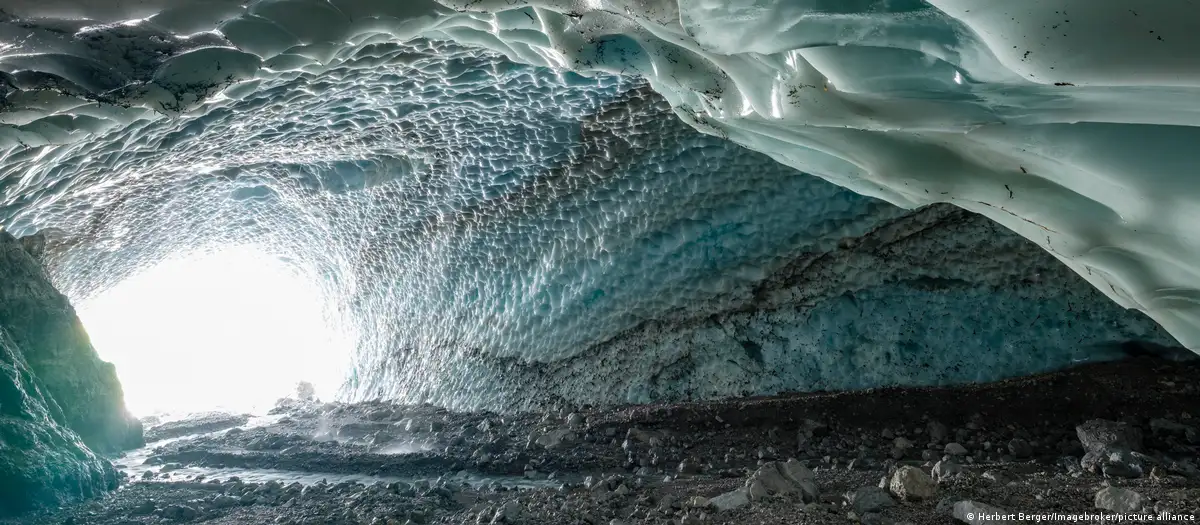
A picture from better days: hiking around the collapsed ice chapel is no longer possible. There is an acute risk of rockfall throughout the entire area, explains National Park Director Roland Baier. The approaches to the Watzmann East Face, a popular climbing route in the Alps, have also been affected by the collapse. Life-threatening situations could arise, warns Baier.
'Depressing and shocking'
"It is both depressing and shocking that the ice chapel, which Alexander von Humboldt visited in November 1797, has now simply disappeared," says Baier. This means that not only has a tourist attraction been lost, but also a geologically significant natural monument.
Uncertain future
Whether the ice chapel could form again remains to be seen. Snow masses would continue to accumulate at the end of the ice trench in the future, explains Andreas Wolf from the German Cave and Karst Researchers Association. This could lead to the development of a new cave system. "The future will tell how large and extensive it will be," says Wolf.
Bleak prospects
Baier sees the collapse of the ice chapel as clear evidence of the changes that climate change will bring to the Alps: "According to forecasts, our two glaciers will follow the ice chapel in a few years," fears the national park director. The Blaueis and Watzmann glaciers are also acutely threatened by climate change.