Senegal's basket weavers demand a slice of the profits
Colorful Senegalese baskets are in demand worldwide — but the weavers themselves earn very little. Middlemen and a lack of infrastructure trap many in poverty. One woman is fighting to change that.
Global demand
Senegalese hand baskets are in high demand internationally and often fetch high prices in Western countries. However, the women who traditionally make these baskets in villages in northwestern Senegal have hardly benefited from the boom.
Every penny counts
At a sales stand on a dusty country road near Ndiakhate Ndiassane, Fatim Ndoye sells baskets in a kaleidoscope of colors and shapes. But it's a tough business. Women earn very little at local markets — often not enough to cover materials and labor costs. But abroad, baskets are sold at far higher prices.
Commitment to economic justice
In 2017, Gambian-Senegalese architect Fatima Jobe came across a wholesaler in Vietnam who described himself as the largest exporter of "Senegalese" baskets. It turned out they were were industrially produced in Asia. The realization that genuine handicrafts were being faked stayed with Jobe. She decided that Senegalese weavers should be given fair opportunities and visibility.
How to be future-proof
Fatima Jobe now works with hundreds of weavers, pays better wages, prohibits child labor and supports village communities. Her fairly produced baskets are also sold internationally.
Absorbing traditions from an early age
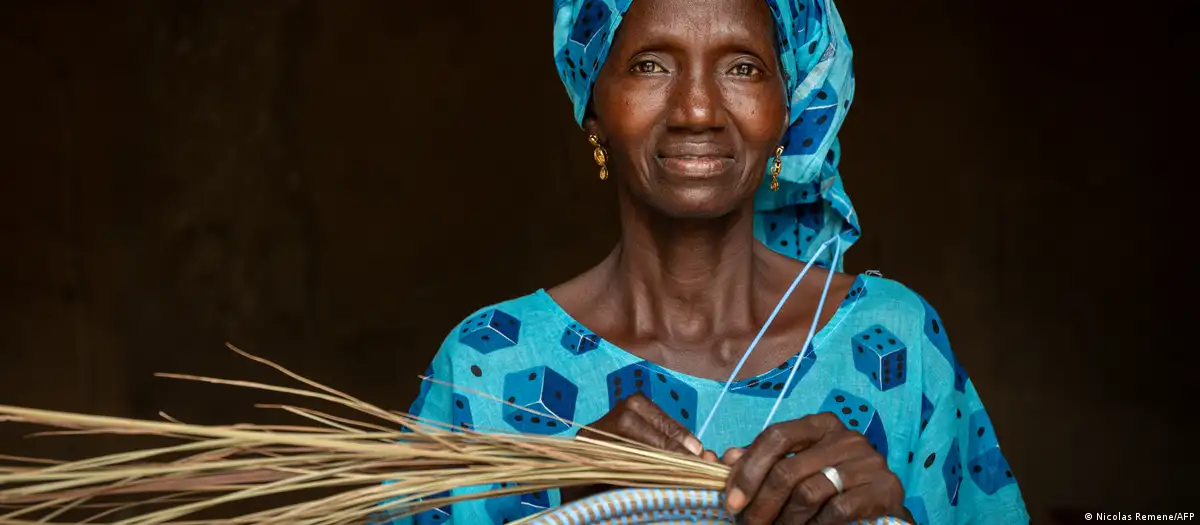
Khady Sene is one of these women. Before she gets to work, she sits down with a dozen or so other women — usually in the afternoon, when the heat of the day has subsided. Then her hands begin to work. They move fast, almost on autopilot, using a weaving technique that has been passed down for generations. "I've been doing this work since I was born," she told the AFP news agency with a smile.
Better wages for skilled trades
For a craft that is so closely linked to national identity, Khady Sene hopes the authorities will create conditions that do more to support the craftswomen, "so we can make a living from this work." So far, Fatima Jobe's initiative is an exception.
Hoping for change
For many women, basket weaving is essential for survival — especially now, in a time of economic uncertainty and migration. There remains a huge gap between global success of the baskets and the limited earnings the craftswomen actually take home. To be able to live off their work, more support and better structures are needed.