Germany benefits from work with Ukraine — defense minister
April 28, 2026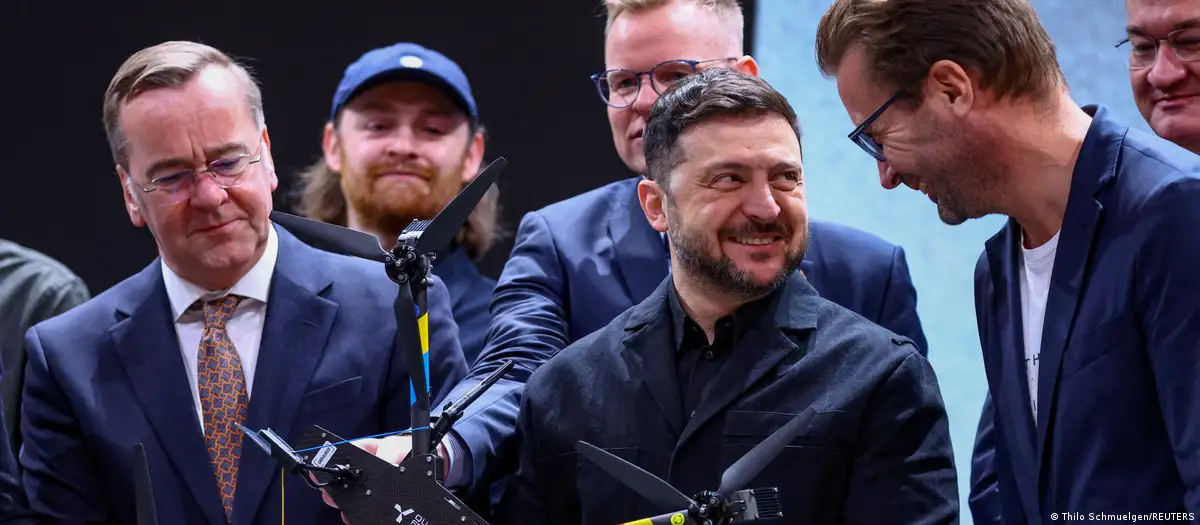
Germany benefits from its military support for Ukraine, Defense Minister Boris Pistorius said on Tuesday.
At a roundtable discussion that included government officials from both sides as well as representatives from German industry, Pistorius said Germany is learning from Ukraine in fields like drone technology and cyber defense.
"Ukraine is a country that, out of necessity, has developed an unbelievable capacity for innovation and speed," Pistorius said.
"They do not develop technologies under laboratory conditions, but rather — quite literally — on the battlefield."
Germany to keep up military support for Ukraine
Pistorius said the German Defense Ministry plans to send more military attaches to the German embassy in Kyiv to serve as points of contact for closer defense cooperation.
German Economy Minister Katherina Reiche, who also attended the talks, announced plans to establish a dedicated liaison office for German companies seeking to collaborate with Ukraine.
Meanwhile, German Finance Minister Lars Klingbeil said after the talks that Germany's 2027 budget — scheduled to be presented on Wednesday — will demonstrate the government's continued support for Ukraine.
Per earlier announcements, Germany is set to provide Ukraine with €11.6 billion ($13.6 billion) in 2027, followed by €8.5 billion annually between 2028 and 2030.
Edited by: Srinivas Mazumdaru