Bolivia's new silver rush, a dangerous mining boom
Around 500 years ago, Bolivia's silver mines made the Spanish kingdom unimaginably rich. Today, high prices are driving a new silver rush — with tragic consequences for the young miners of Potosi.
Rich Mountain
Cerro Rico, Spanish for the "Rich Mountain," stands 4,800 meters above the mining town of Potosi in the Bolivian Andes. Its interior once contained the world's largest silver deposit. In the 16th century, the Spanish conquistadors forced indigenous laborers to mine silver before bringing it to Europe. The silver formed the capital stock of the Spanish empire.
Valuable world cultural heritage
The shiny silver veins that once ran through the mountain have long been mined out. Today, the historic silver mines are a UNESCO World Heritage Site. Nevertheless, thousands of miners still work in Cerro Rico, even 500 years after the Conquista. Besides zinc, tin and lead is also being extracted.
Coveted booty
A worker presents a silver nugget found in Cerro Rico: four years ago, the precious metal cost less than $20 (€17.20) per ounce, but now the price is around $87. The price of tin, used in semiconductors, has also tripled over four years to over $57,000 per ton (around $1.50 per ounce).
Descent into the underworld
The price increase is leading to a new silver rush. The precious metal is no longer used solely for jewelry but is now primarily used in the production of electric vehicles and solar cells. Miners working underground in Cerro Rico and other mines around Potosi earn a monthly wage of around $1,000 — more than twice the minimum wage in Bolivia.
The curse of silver
During colonial times, Potosi, with its population of 160,000, was at times larger than London or Rome. Today, the metal boom has once again triggered an influx of young people. Attracted by the good earning opportunities, young men in particular are risking their lives. According to government figures, at least 32 miners died in the department of Potosi in January and February 2026 alone.
Crumbling mountain
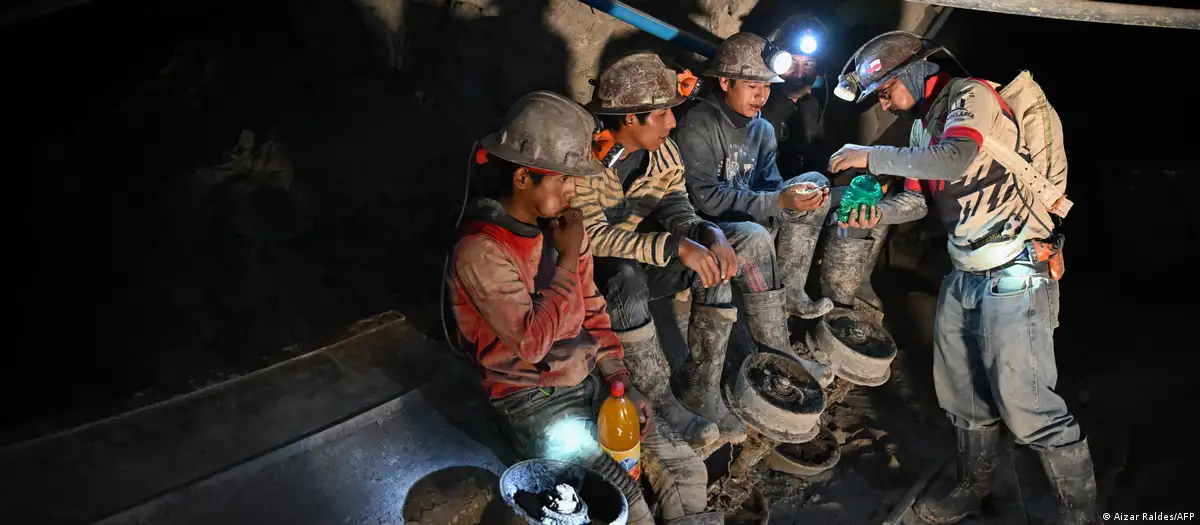
The work is dangerous: after five centuries of mining, Cerro Rico is so riddled with tunnels that it is slowly collapsing. And even today, extracting the coveted metals is still hard manual labor: the miners work in several shifts, using hammers and chisels to remove large chunks of rock from which they extract the precious ore.
'I couldn't breathe'
In addition to the danger of mine collapses, minors face other threats to their health. Efrain Villaca, 28, almost lost consciousness in the mine after being poisoned by carbon monoxide released into the air. "I felt like I was suffocating. I couldn't breathe," he told the AFP news agency. According to local hospitals, most of the victims are between 20 and 25 years old.
'A state of near slavery'
The Rosario Bajo mine is managed by numerous cooperatives whose members used to do the hard work themselves. However, "with the high prices, they have stopped working themselves and hired people to do their work instead," mining researcher Hector Cordova told AFP, describing "a state of near slavery."
Dependent on coca leaves
To suppress hunger and thirst, workers chew coca leaves, a tradition that also helps combat altitude sickness. The miners, recruited by cooperatives, have no health insurance and no safety equipment beyond helmets. "We never know if we'll come out safe and sound,” one of the nearly 15,000 miners still active told AFP.